Case studies illustrate how UNC Charlotte uses 3D technology to study the human body
February 2, 2026
With a quick swipe on the life-size touchscreen, students can see muscles, tendons, bones and organs inside a human body. They can magnify, rotate and dissect the anatomical structure. Everything they see under the skin (and on skin) is real, only digitized.
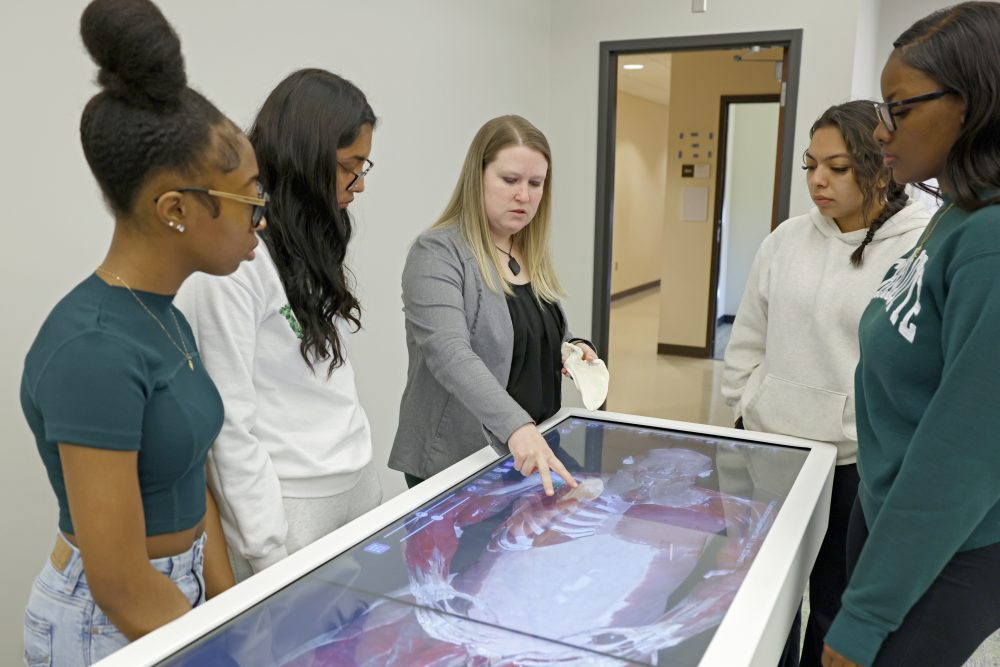
This anatomy experience was developed by Anatomage, a medical imaging software company that specializes in digitizing real human bodies into interactive, fully functional 3D cadavers for education and medical training. The California-based company manufactures 7-foot-long touchscreen tables (like giant iPads) that allow students to view human bodies without the need for physical cadavers.
When UNC Charlotte’s College of Health and Human Services acquired its first anatomy visualization table from Anatomage, the plan was to focus its use in the College’s School of Nursing. Now, more than four years later, the anatomy technology has become a comprehensive, College-wide tool used for both graduate nurse practitioner training and undergraduate anatomy and physiology courses.
The College currently has three tables in use along with 16 tablets that serve 1,400 undergraduate anatomy and physiology students annually and provide case-based learning to nurse practitioners preparing for hospital-based care.
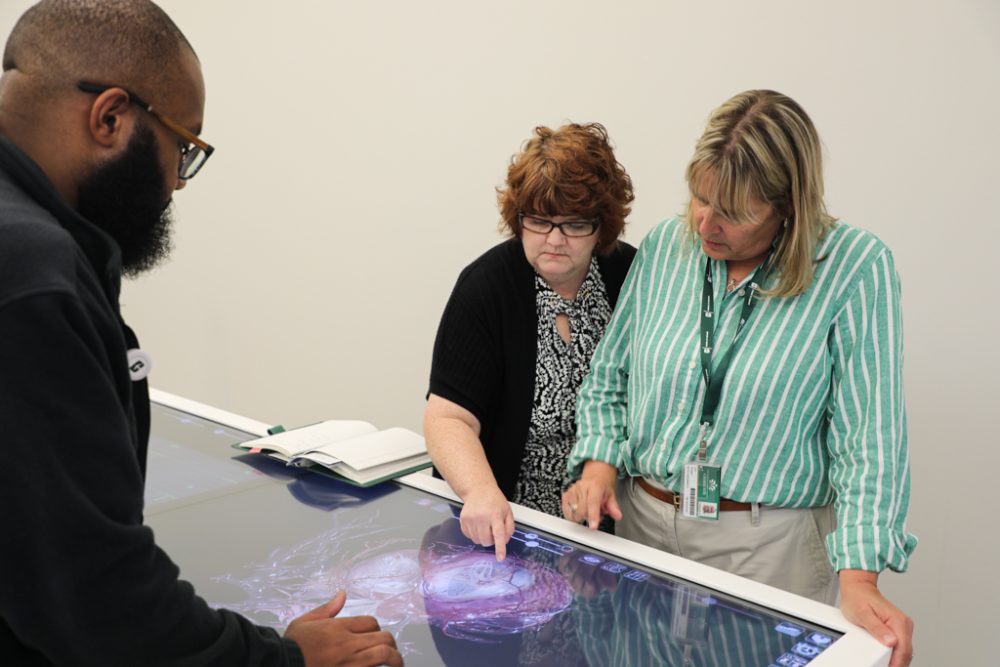
The success of UNC Charlotte’s anatomy labs led Anatomage to develop case studies detailing how the real-human-based content has impacted teaching, student engagement and comprehension at the University. The company conducted extensive interviews with College of Health and Services instructors to demonstrate how integration of the high-tech tables has led to transformative outcomes.
The case studies reveal how the College of Health and Human Services is redefining its approach to health sciences education by enabling the visualization of dynamic anatomy and physiology.
Written by Pam Davis