UNC Charlotte’s School of Nursing recognized for simulation education excellence
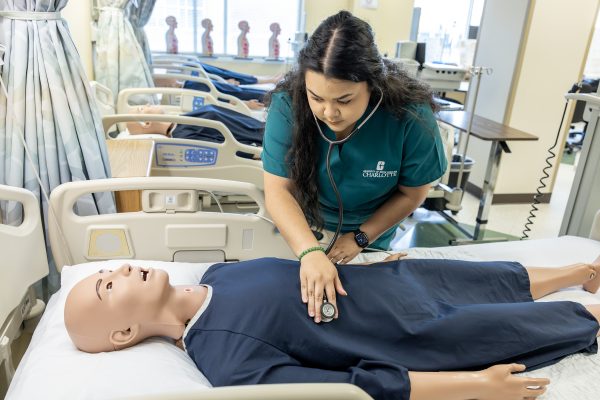
Many nursing skills aren’t learned from a textbook, they’re practiced on people — artificial people who won’t be harmed if mistakes are made during the learning process.
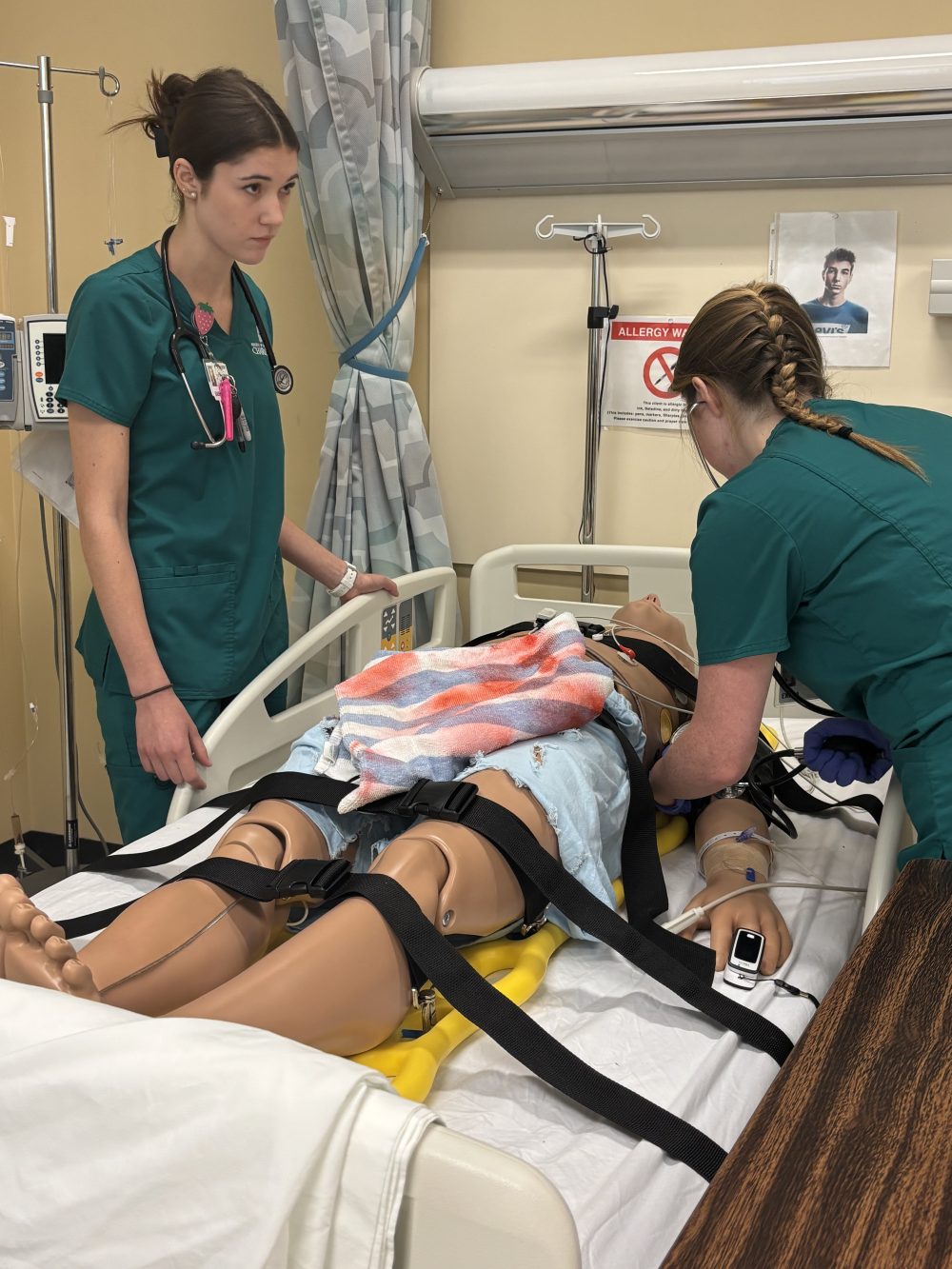
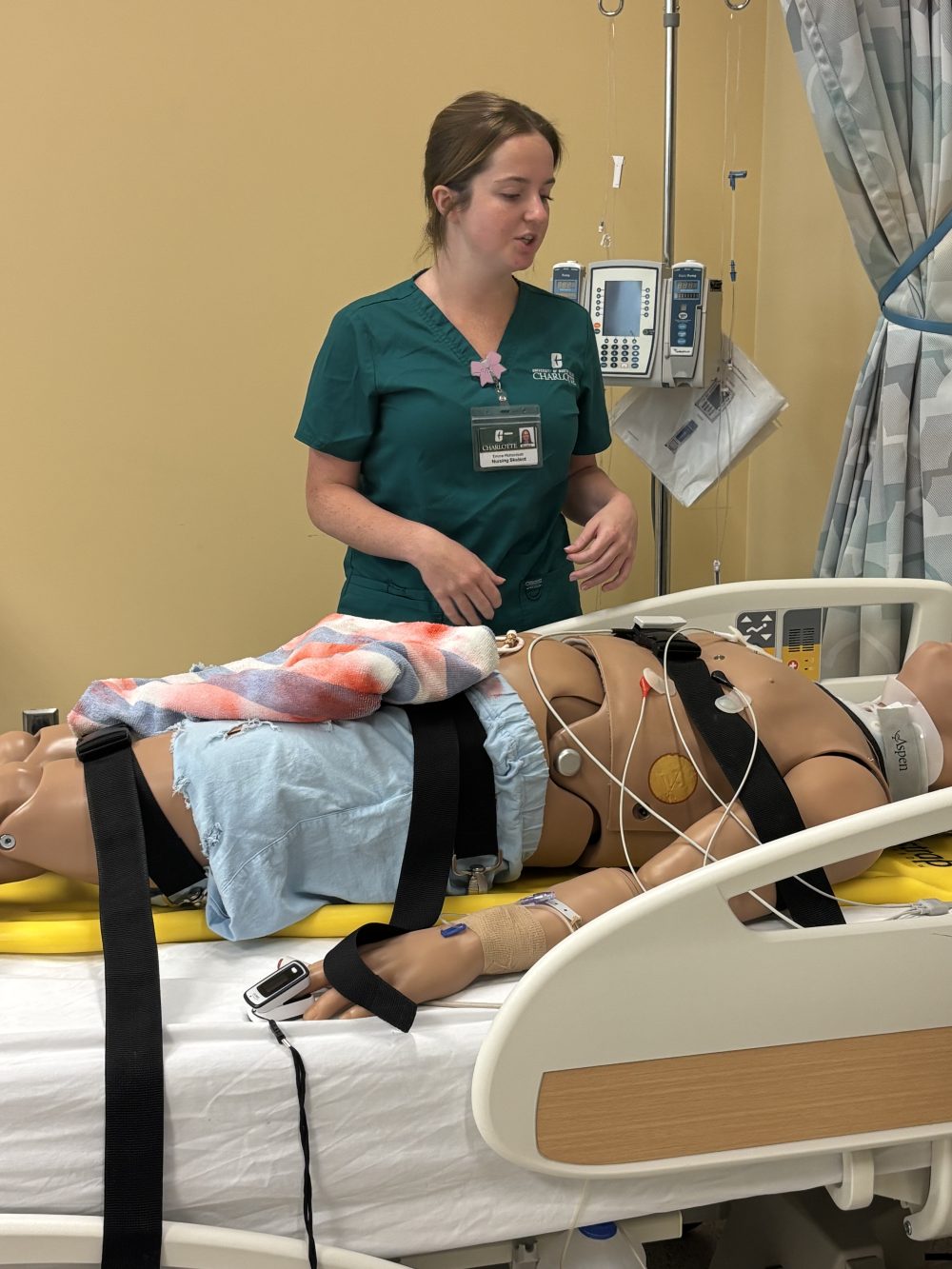
These artificial people are actually patient simulators — full-body, realistic manikins that are computer-controlled to respond dynamically to student interventions such as catheterization. The patient simulators provide an important bridge between classroom theory and real-world clinical practice.
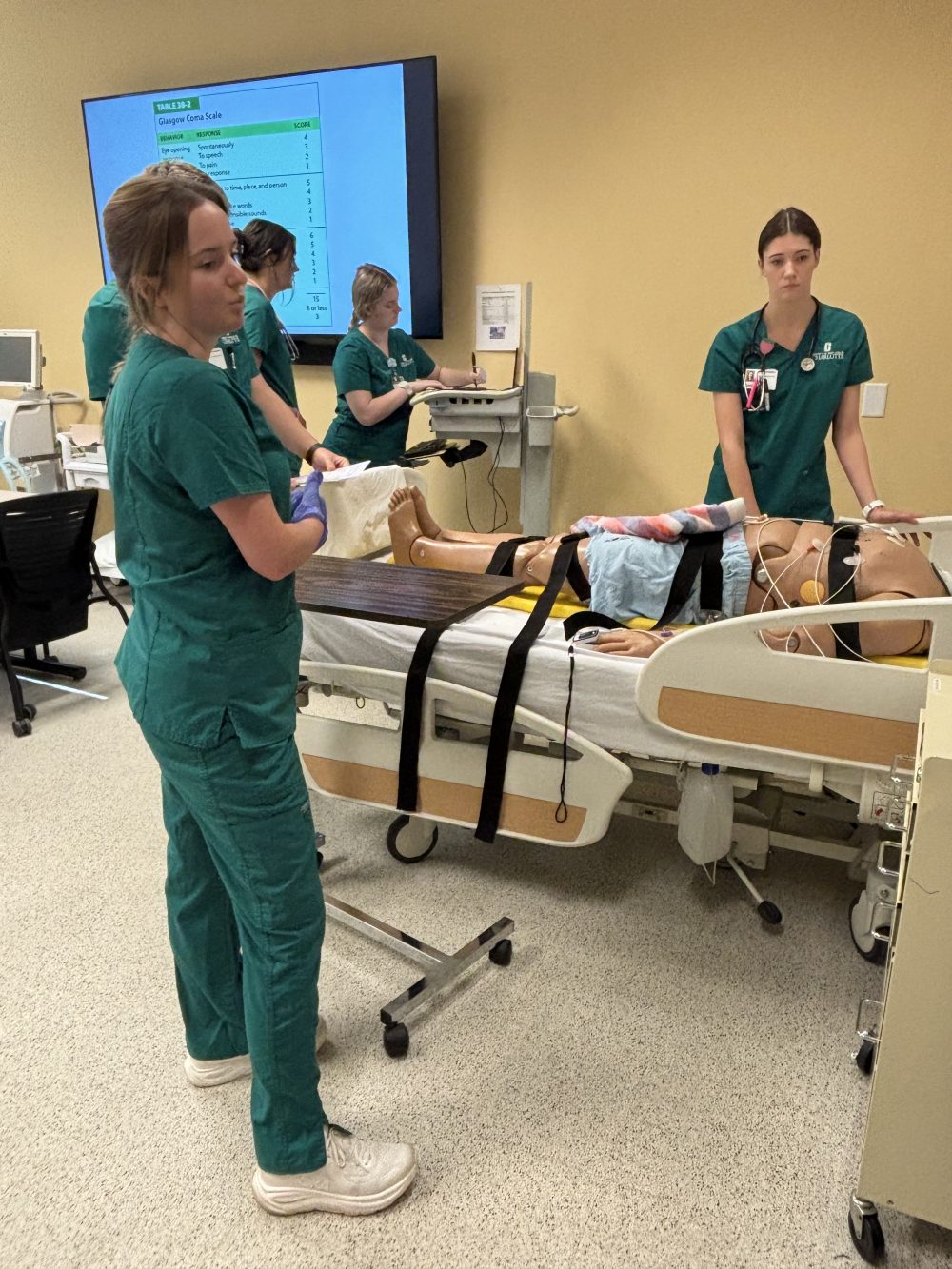
Patient simulators, along with virtual reality and role-play, are important educational tools used in nursing simulation, an experiential learning method that replicates real-life healthcare situations.
“Simulation gives nursing students opportunities to safely practice the skills they will need on day one of their employment,” said Melinda Pierce, simulation and interdisciplinary practice coordinator and senior lecturer at UNC Charlotte’s School of Nursing. “They can’t hurt anyone physically in a simulation and they can’t hurt themselves psychologically when a mistake is made. Simulation helps nursing students build competency and their confidence.”
The nursing simulation program Pierce has built over the past seven years at the College of Health and Human Services recently received the Healthcare Simulation Standards Endorsement™ from the International Nursing Association for Clinical Simulation and Learning.

The endorsement is a vital benchmark that publicly recognizes institutions for delivering exceptional, evidence-based simulation education. Only two other North Carolina institutions are currently endorsed: Duke University and North Carolina Central University.
Achieving the Healthcare Simulation Standards Endorsement signifies a commitment to ensuring that every simulation activity is thoughtfully designed to meet educational goals while adhering to best practices that promote safety, reliability and measurable outcomes.
“This endorsement legitimizes us as a robust simulation program. It’s the seal of approval and proof that we’ve done our due diligence.” Pierce said. “When students are considering nursing schools, one of the first things they want to know is if the program includes simulation.”
To achieve the endorsement, an institution must prove it excels in four foundational pillars of simulation-based education:
- Prebriefing: Ensures learners are prepared and oriented before a simulation starts
- Facilitation: Provides structured guidance to help learners meet their objectives
- Debriefing: Facilitates guided self-reflection and feedback to drive retention
- Professional Integrity: Requires ethical behavior and mutual respect throughout the experience
UNC Charlotte’s endorsement is valid for three years, through 2029, after which time the School of Nursing may reapply to extend the endorsement.
When Pierce joined UNC Charlotte, the nursing program had only three patient simulators, which were in various stages of disrepair, and only two faculty members with experience in simulation education.
During her tenure, Pierce has built Charlotte’s simulation program into one of the most robust in North Carolina. The School of Nursing now has 37 patient simulators of varying degrees of fidelity and 15 simulation labs. There are 12 simulation educators, six of whom are Certified Healthcare Simulation Educators, one simulation operations manager and one simulation technician.
Charlotte’s simulation program will be formally recognized in June at the annual meeting of the International Nursing Association for Clinical Simulation and Learning. Pierce will be there to accept the award.
“It’s an honor to be recognized for the importance UNC Charlotte places on simulation education for our nursing students,” she said. “It’s our goal to send them into healthcare facilities as prepared and as self-assured as possible.”